Pre-Surgical Assessment
Clinical examination and diagnostic support help decide the right treatment plan for each pet.

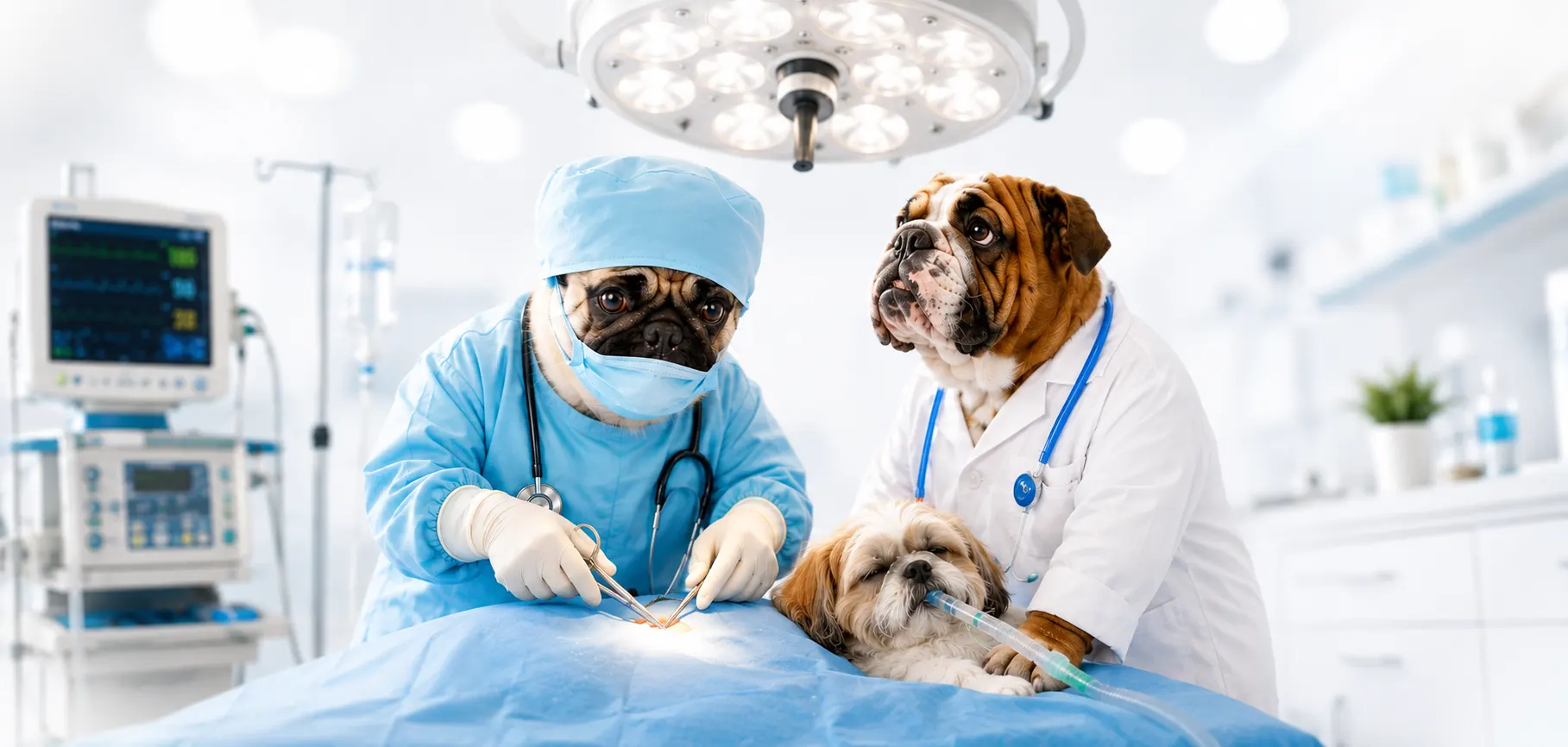
Surgery & Intensive Care
Felican Pet Hospital provides surgical and intensive care support for pets with injuries, tumours, blockages, urinary stones, caesarean needs and other conditions requiring advanced attention.
Surgical Care
Your pet may need surgery for many reasons: broken bones, intestinal blockage, gall bladder disease, kidney or bladder stones, caesarean delivery, tumours or other critical conditions.
At Felican, surgical decisions are supported by diagnostic tools such as ultrasound scanner, ECG and X-ray, helping the team understand the condition, advise clearly and plan the safest treatment path.
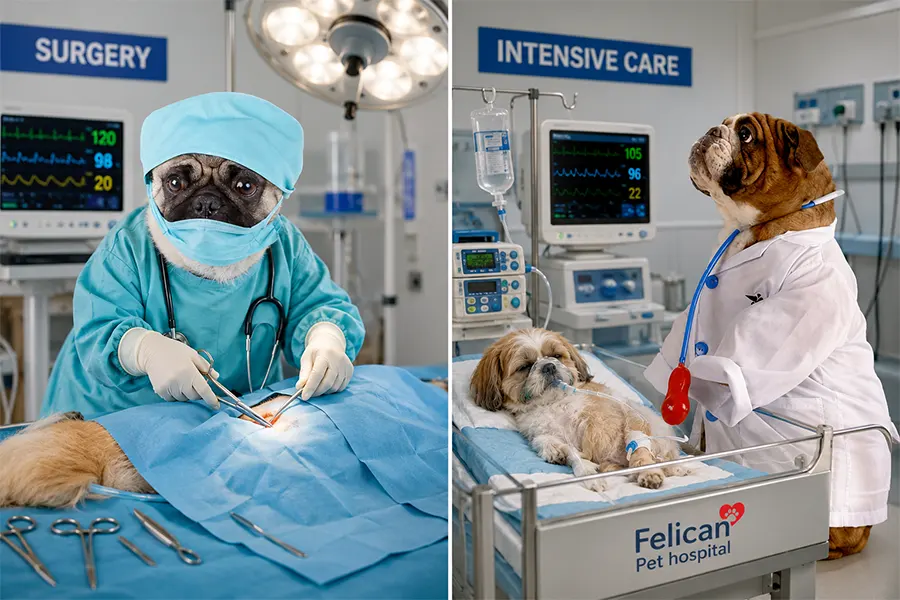
Care Capabilities
Clinical examination and diagnostic support help decide the right treatment plan for each pet.
Surgeries are guided by Felican's senior veterinary team led by Dr. S. Sunil Kumar.
From anaesthesia to procedure monitoring, pets are handled with careful clinical attention.
Critical pets and post-surgical cases receive monitored recovery support in a controlled setting.
The intensive care unit at Felican is supported by life-supporting technology and equipment for pets that are extremely ill or recovering from trauma or surgery. Pets are monitored until they are well enough to return home safely.
Care Path
The team helps families understand the condition, the treatment decision and the recovery needs before moving ahead.
Symptoms, imaging and clinical examination guide the treatment decision.
The team explains the surgical need, anaesthesia support and expected recovery process.
Post-operative care and ICU support help pets recover with closer supervision.